Bishop Coenwald: who’s he?
So, what is a historical fiction author supposed to do when they read some research and find they’ve missed something from a novel they’ve already published (again)? Here’s the latest development from my research into ‘Podevin and Elgiva’s Return.’
So, what is a historical fiction author supposed to do when they read some research and find they’ve missed something from a novel they’ve already published (again)?
Here’s the sentence: ‘When Coenwald, bishop of Worcester, escorted two potential royal brides overseas in 929 so that the future duke of Saxony, Otto I, could choose between them, a contemporary writer noted that it gave him the opportunity to visit “all the monasteries throughout Germany”.’ [‘The Anglo-Saxons: A History of the Beginnings of England’, by Marc Morris, p.283]
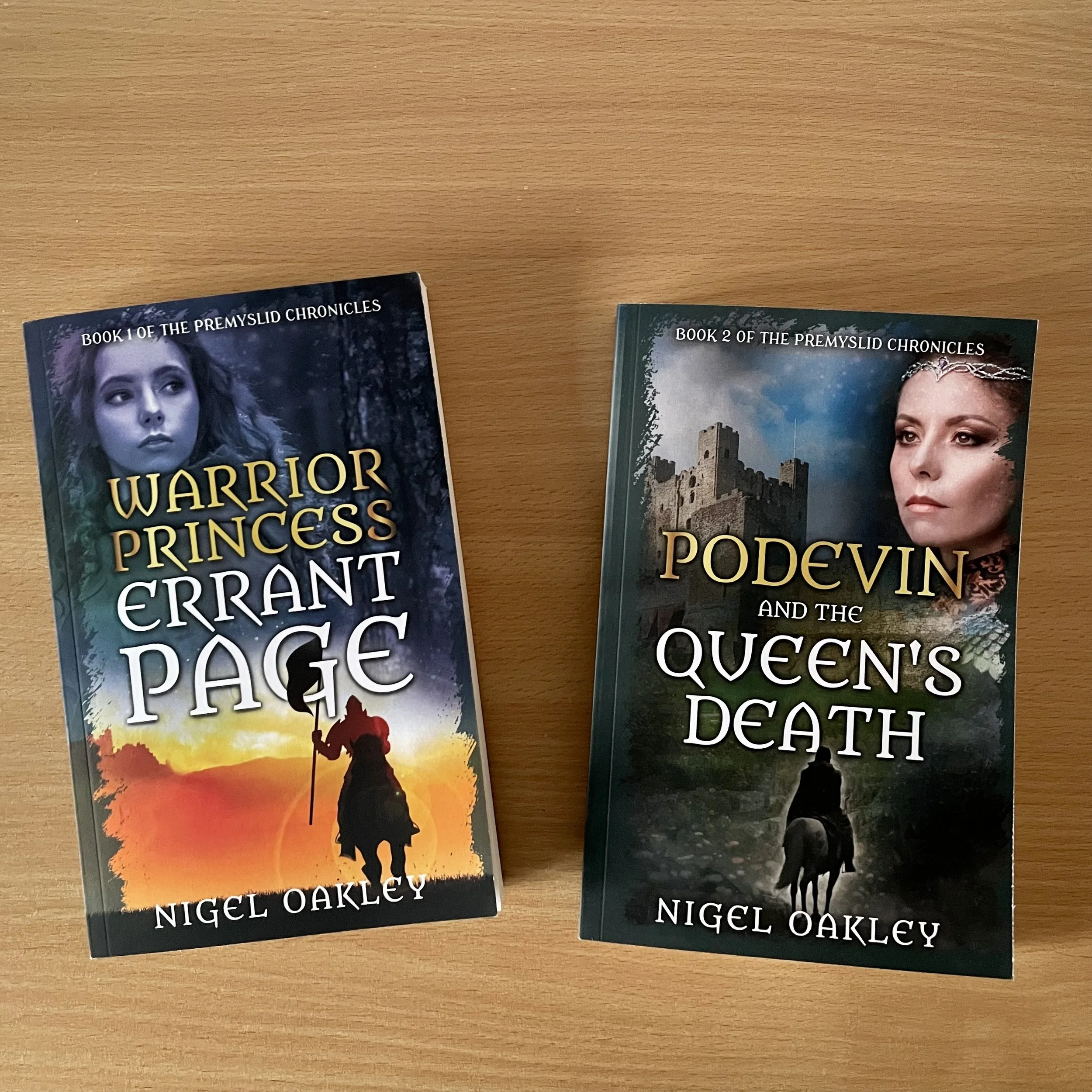
Before I published ‘Warrior Princess, Errant Page,’ I spent ages trying to track down who took my Warrior Princess, Elgiva/Emma, and her sister to Saxony: and failed completely to come up with a name. I was able to find out that she had a chaplain with her (who became my Brother Mark), but who was the escort? So, I came up with Geraint, a captain of King Athelstan’s bodyguard. None of this is necessarily wrong – I cannot guarantee, or even be remotely sure, they were the actual names. But there was a chaplain and there would have been some sort of military escort: there were two princesses of the royal house to get half-way across Europe!
Since ‘Warrior Princess, Errant Page’ came out, I discovered that my Anglo-Saxon Princess Emma was not the only contender for the ‘Emma’ as wife to Boleslav II of Bohemia. That’s the trouble with historical research – more and more is being discovered as time goes on. By the end of ‘Podevin and the Queen’s Death’, it is all sorted: the Anglo-Saxon Emma has been ousted (ready for further adventures in book 3), and the new Emma is in place.
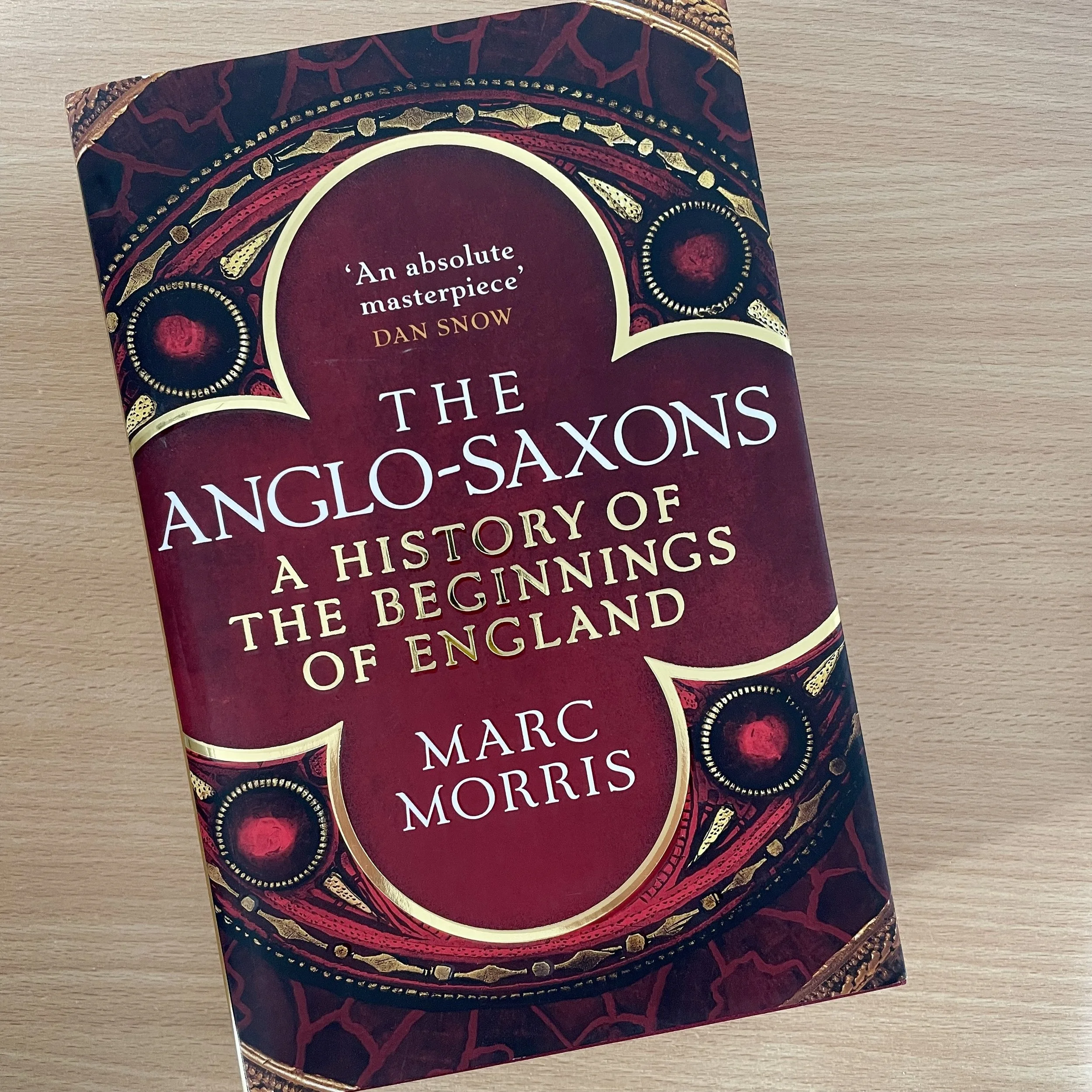
And here, when I’m researching book three of the trilogy, ‘Podevin and Elgava’s Return’, I’m trying to find out all I can about Dunstan (Abbot of Glastonbury and, later, Archbishop of Canterbury), I come across the sentence quoted above. And it seems that both Bishop Coenwald and Abbot Dunstan would be at court, rather than in their diocese or abbey respectively, in A.D.947: the year I chose for Emma to reappear in Winchester.
So, how is Bishop Coenwald, apparently (like St Dunstan) something of an austere reformer going to react when (in my fictional story) Emma turns up at court? As a religious reformer, Coenwald is not going to be a fan of anyone interested in ‘the delights of the flesh’. In the story, Emma is recently re-married. He is not supposedly interested in property (or anything to do with money) unless it’s for the church. So, when Emma shows interest in land which he thinks should be another abbey … And he knows Emma isn’t great when it comes to obedience from that long trip to Saxony. So, maybe Emma was the princess Coenwald didn’t coach for the role as Queen of Saxony? And he knows her pretty, compliant sister is dead. At the moment, this is all speculation on this writer’s part, based on a few paragraphs in my research – and my knowledge of my warrior princess character over two books.
Is it annoying that I have a new character to fold into my story? Perhaps not – other than I’ve had to spend these days and weeks researching instead of writing – but I do wish I had known about him before, as now I’m having to think up how to explain this omission in book 3 …