Lavender Cottage
It’s been a while since I posted, so here’s a story about a group of people who tried to stop the march of ‘progress,’ but came up against the might of big business in the form of the postal service …
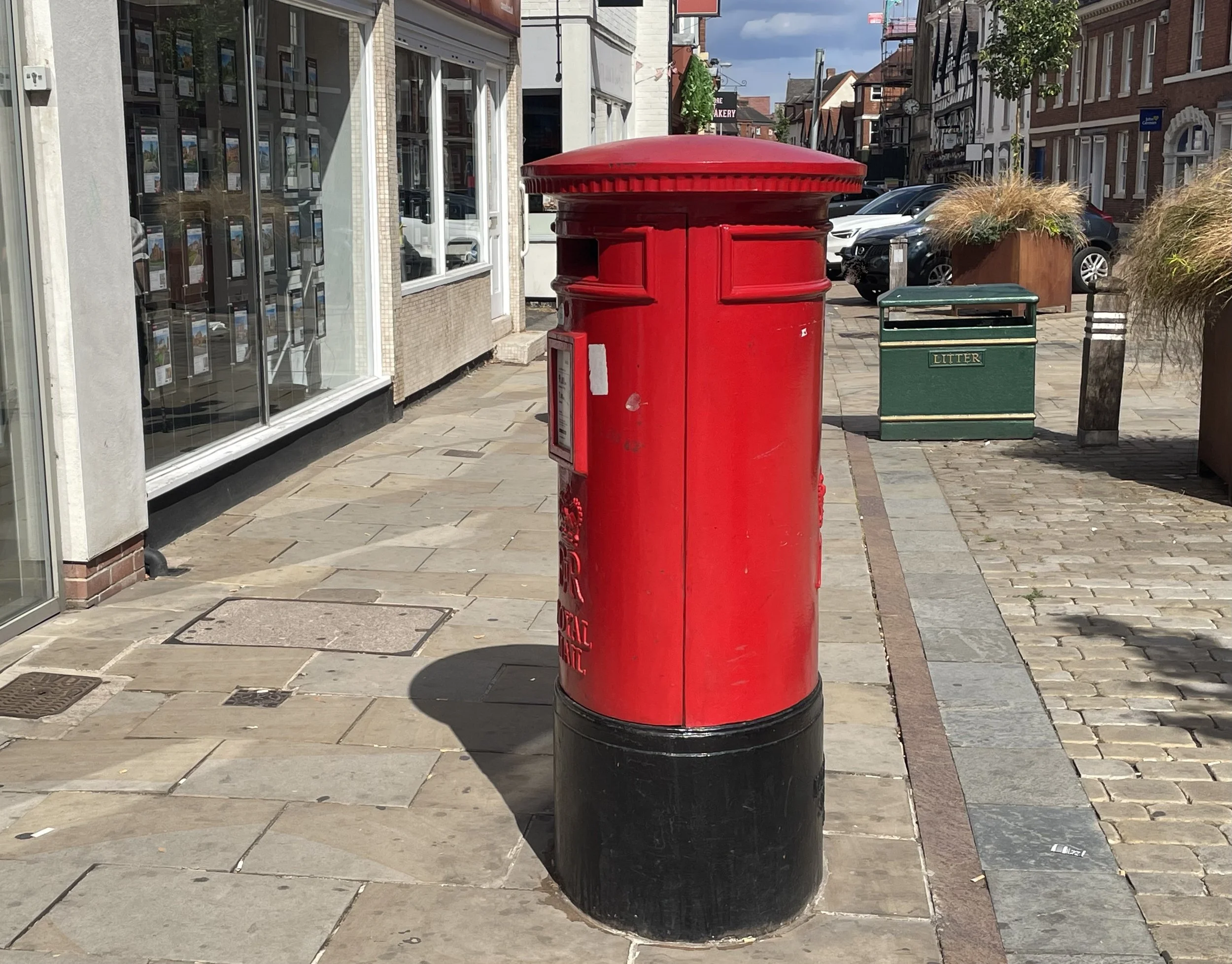
The crisis had been going on for three days. Never before had the Post Office at Much-Breedon-by-the-Sea missed the post. Not even during the Horizon scandal (which had, of course completely exonerated the postmistress and so united the village as never before) had even a single day’s collection just been forgotten. However, this week, with a new driver, the Royal Mail van had zoomed up to the post-box situated just outside the Post Office, a young man had jumped out, emptied that post-box, got back into his van and zoomed off – surely doing more than the legal thirty miles an hour.
The first time it happened, the benefit of the doubt was given: a mistake was assumed. An email was sent. That email got no more than a standard reply, saying something to the effect that the complaint ‘would be looked into.’ The villagers hoped everything would be back to normal soon. The second day was a repeat. And, yes, the mail van was moving too fast through the village. Another email, and another standard reply. By the third day, it was clear action was required.
‘Excuse me. Aren’t you going to come in to collect the rest of the post? And the parcels?’ Bessie Brownlee had been postmistress for forty-three years now, and was not about to be put off by yet another youngster who was more interested in his phone than doing his job.
‘Yer wot?’ the young man barely glanced in her direction before heading off to his van.
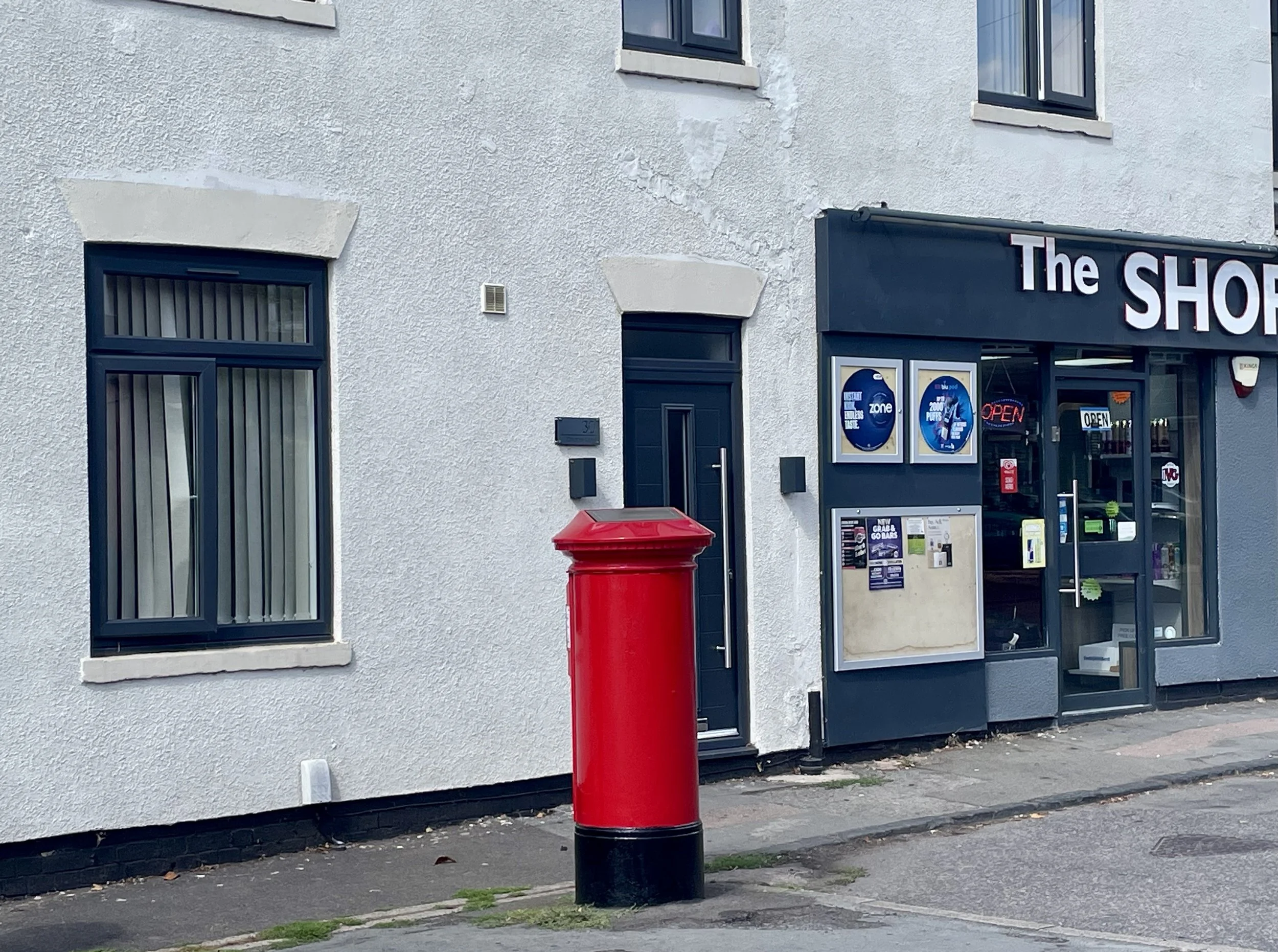
‘This is a Post Office. You are supposed to call in to collect the mail.’ Bessie said with some asperity, from the door of the afore-mentioned Post Office and village shop. If Bert hadn’t pointed out the van’s arrival (blocking the entrance to the shop’s car park), she would not have known – being too busy serving customers – and missed it. Again.
The man with the van flung the almost empty mail bag he was carrying into the back of his vehicle with unnecessary vigour – anything fragile had better be well packed – and turned towards her.
‘I don’t have to do anything you tell me. You’re closed down.’ He swaggered over to her and stood over her four-foot-ten frame, ‘in fact, you’re sacked. If you’ve opened that mailbox up without authorisation, I’m going to report you and you’re going to be in so much trouble. So, why don’t you just f--!’ It was clear what he was about to say but, perhaps realising that swearing at elderly ladies might not go down well with his employers, he changed his ending to a, rather lame, ‘go away,’ and tried to escape.
However, his way back to his van was blocked. Bert had slipped out of the shop – actually, he had just walked out in full view of anyone who was remotely observant, but the young man was much too busy being obstreperous to notice.
‘And what are you? Her bloody enforcer?’ He attempted a side-step, but somehow got entangled in Bert’s walking stick and fell over. Neither Bert nor Bessie attempted to help him get to his feet. Nor, for that matter, did the little crowd of elderly shoppers who had, it seemed, stopped by to see the entertainment.
‘That’s assault! I’ll get you for that!’ but the attempts to get to his feet were hindered. Bert’s stick had, accidentally of course, been planted in the middle of his chest, and Bert was leaning on it. ‘Get this fucking thing off me!’

‘Move it to his throat, Bert,’ came a voice from the crowd, ‘Stop him yakking.’
There was a groundswell of approval from those standing around.
‘Oh, he’s got to apologise to Bessie, first.’ Bert said, increasing the pressure.
In response, the young man dug out his phone, ‘I’m calling the police!’
Another stick, belonging to a second, supposedly frail, pensioner, crashed down onto the hand holding the phone. The young man yelped, and looked up at Bert, resentment and entitlement clear in his glare. ‘You know I’ll get you. You’re dead.’
‘The police are already here.’ Bert said, ‘but they don’t seem to be doing much.’ He glanced up at another of the crowd. A grey-haired gentleman, who was wearing a tweed jacket and had something of a military bearing
This man took a step forward so the youngster could see him. ‘That’s because I’m waiting for an apology – and for you to do your job.’ he said as he stooped to pick up an abandoned phone.
‘Have you seen any assault?’ Bert asked.
‘Assault? What assault? There’s a very rude young man who seems to have tripped up. And threatened you. If you want to report that, Bert, I can be a witness. So can all these people, I’m sure.’ Murmurs of agreement floated into the atmosphere.
‘I’m doing my fucking job! I collect the post from that box. That’s what I was told to do, and nothing else.’ He paused, ‘If you try and stop me, you’re the ones getting into trouble. Not me.’
‘You’ve got three days’ worth of mail in the Post Office to take with you. And parcels. And it’s all bagged up. All you have to do is collect it.’ Bert used his most reasonable of voices.

The young man finally realised he was getting nowhere. Besides, he wanted his phone back. ‘All right! I’m sorry,’ he yelled. The walking stick was removed from his chest, but the pensioners who had moved, shuffled rather, round to block his access to his own van, stayed where they were. Two old ladies, with old lady trolleys – the pull-along kind – were even holding their own conversation at the front end of his van. What was he supposed to do, knock them down while driving away? And his phone was still missing. He hadn’t noticed the old policeman hand it over to Bert. There being no other option, the young man had to collect the bags, the letters and parcels, and put them in his van, before the pensioners shunted themselves out of his way so he could drive off.
Even as he started the engine, Bert leaned in the open driver’s window, a phone in his hand.
‘Just make sure you collect everything, every day, from now on.’ The phone was tossed across the young man’s lap to land on the passenger seat. The van moved off and gained speed even as it rounded the corner.
The letter arrived the next week. It had, clearly and unbelievably, been ‘lost in the post.’ The Royal Mail, in its drive for efficiency and a ‘better customer experience,’ had decided to close the Post Office at Much-Breedon-by-the-Sea. The villagers could go to the facility at the next village, Lesser-Breedon-by-the-Lake. Of course, this caused a furore. As soon as Lesser-Breedon-by-the-Lake had stopped being a village and had been absorbed by its neighbouring town ten years ago, their Post Office had been closed. Therefore, there was no Post Office for the villagers to go to. Unless they went all the way into town – and everyone knew how long the queues were there.
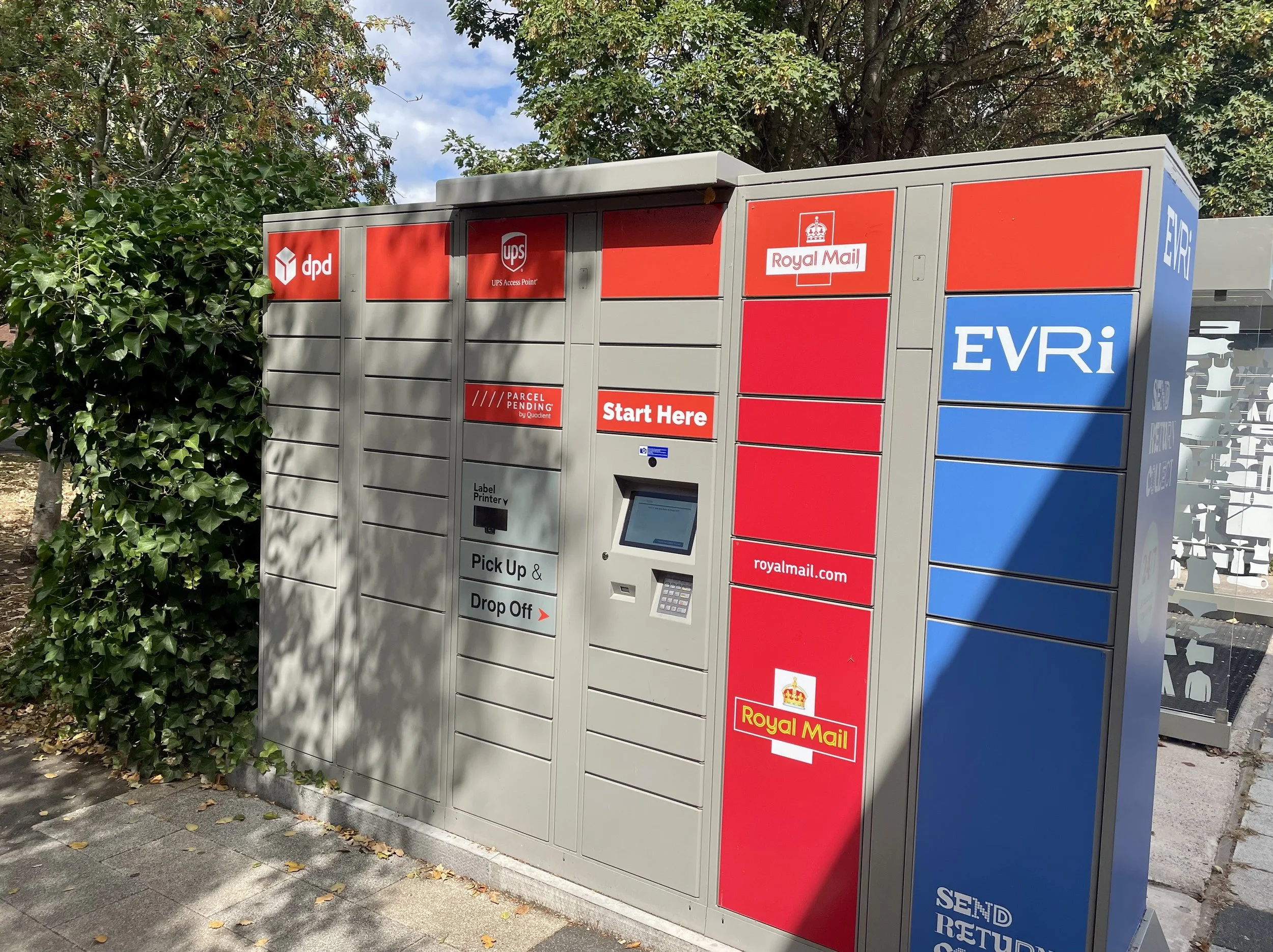
Royal Mail doubled down. There were no plans to remove the post-box, so letters could still be posted. As for parcels, they had said ‘facility.’ What there was (if the people of Much-Breedon-by-the-Sea cared to look) was a parcel drop-off point where the Post Office used to be at Lesser-Breedon-by-the-Lake. Which was much better than a Post Office as no-one had to queue. All you had to do was go online to sort out the postage, drive to the drop-off point, and it was all done. And you could do so at any time of day or night. The photo of half-a-dozen people waiting to drop off their parcels in the rain was dismissed first as a photo-shopped forgery, then as ‘highly unusual,’ and finally as something that would only happen rarely once people had got used to how the facility operated. It really was quite easy if you had the correct labels, and if you didn’t, you could print out the labels on ordinary paper and glue them onto your parcels. Provided the barcode was not tampered with, all would all be well.
As for Bessie Brownlee, her career with Royal Mail ended under something of a cloud. She had, according to them, ‘facilitated’ a near riot when their employee was prevented from doing his job. The fact that she had done nothing herself, other than ask the young man to do his job, did not appear to register until the local media, with online assistance, took an interest. A few people even dared to wonder if it was Royal Mail’s vengeance as they’d had to compensate Bessie over the whole Horizon scandal – a suggestion Royal Mail vehemently denied.
The police, having had no reports, said ‘no comment.’ The young man himself went very quiet once it was pointed out his youngest ‘assailant’ was fifty years older than he was. It was also pointed out that, when he was asked to do his job, the Post Office in question had not been closed down – even the delayed letter gave Bessie six months’ notice. His only defence was he was doing what his manager had told him. He was also not in the best place with Royal Mail himself, having been caught speeding through the village. (Nobody said a word about who tipped off the relevant authorities: former Chief Inspector Watson was particularly tight-lipped).
All the fuss and attention was a mere flash in the pan. A nine-days’ wonder. There was a brief, but unsustained, spike in the shop’s takings. There was a petition, there was a demonstration, there was a whole campaign pointing out the dire state of public transport getting any parcels to the next village. It all came to nothing. The Post Office closed on time with no fanfare, and no further media interest. The shop limped on for two months more, but it had to be put to Bessie, if she was going to sell it as a going concern, she had better not wait until it stopped being a going concern. After all, people had often got their bits of shopping when they came to the Post Office. If they had to get their stamps, or pension, elsewhere, then it stood to reason they were going to shop elsewhere, weren’t they?
A nail bar? A café? A house of multiple occupancy (HMO)? Every idea faced opposition and petitions, and letters to the Council – especially the HMO. But it was the granting of the permission by the Council for the HMO that enabled Bessie to finally sell the property. Bessie had a very hard time from some people once it was discovered she had put in the application. But what could she do? The shop was losing money and she did not have infinite resources. Were her interrogators able to come up with a better idea? And the money to implement that idea? She thought not.
Her shop did not become an HMO. However, once one permission for a change-of-use had been granted, why not another? If you dig up the parking lot, you can create quite a space for a front garden, and hide it behind a hedge. The former Post Office and Shop can be converted into a very nice, four-bedroomed, three-bathroomed, house or ‘cottage,’ and out-of-towners can live in it as their weekend retreat. They can park their SUVs round the back on the newly-created driveway by the landscaped back garden, which appeared when the old storage facility for the shop was flattened.

The new owners could also insist that Royal Mail remove their post-box from the privately-owned front garden – and Royal Mail have complied. The reasoning being, the post-box was unused, and so, according to the logic of big business, not required. Pointing out that access had been blocked, so the villagers could not use the post-box for its intended purpose, changed nothing.
Despite all they could do, the residents of Much-Breedon-by-the-Sea have now lost their Post Office, their shop, and now, the only post-box. The new ‘Lavender Cottage’ with its near-invisible owners, is signalling the way Much-Breedon-by-the-Sea will go. There have been four other house sales since Bessie sold up. All have been sold to out-of-towners, and all four properties have been granted planning permission for extensions (some bigger, some smaller) that are no more than disguised upgrades.
On the other hand, any attempt from the Council to build on land between Much-Breedon-by-the-Sea and Lesser-Breedon-by-the-Lake will now be contested vigorously. After all, being a mere suburb has done nothing for Lesser-Breedon-by-the-Lake’s character. In fact, Lesser-Breedon-by-the-Lake is no longer referred to by that name: it’s just part of the town. The lake is simply the local reservoir. It has to be admitted, even by those with the rosiest-tinted of glasses, it’s definitely gone downhill. Whereas Much-Breedon-by-the-Sea (a place which has retained its name) is on the up. You don’t get teenagers hanging around on street corners, nor any rowdy behaviour. The police don’t need to be called. And the weekenders can have a nice, quiet time behind their electric gates before, come Sunday night or early Monday morning, they desert ‘their’ chocolate-box village for the city.
Most of the time, Lavender Cottage sits empty. Occasionally, a pensioner or two will wander by, pause, and remember how things used to be – and the time they fought Royal Mail and, for a few heady days, thought they’d won.